 5.5 /10
 7.6 /10
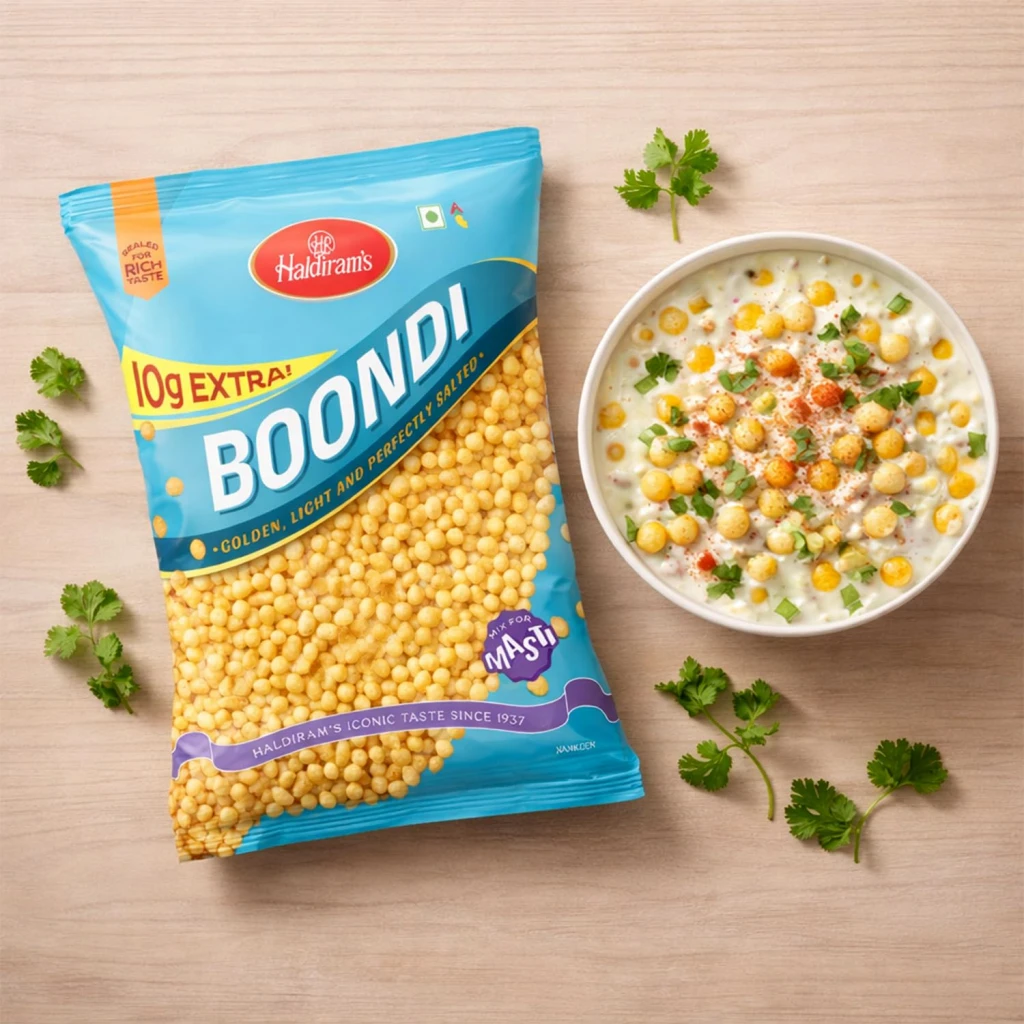
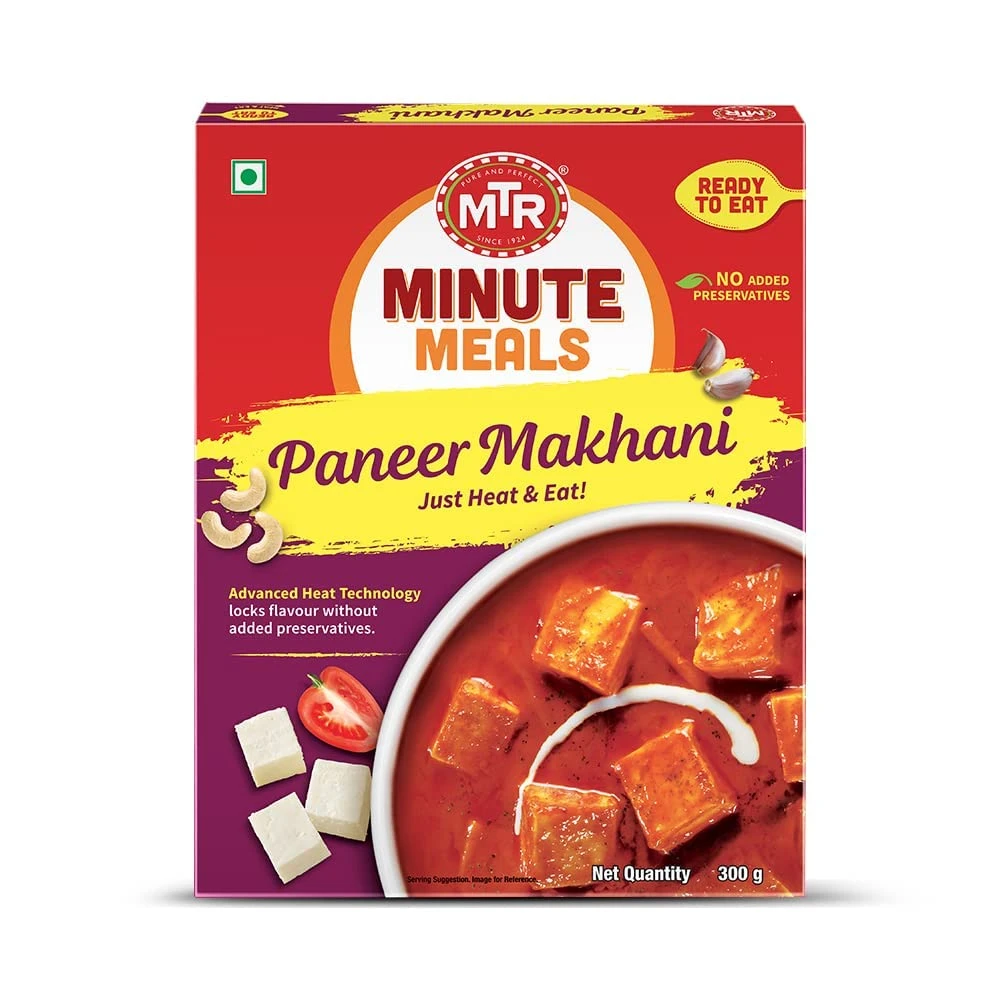
Haldiram's Delhi Boondi Plain vs MTR Ready to Eat Paneer Makhani
Decode Label-scored on the concerns that matter for Food — the facts from each label, side by side. We decode, you decide.
Pack images are shown to identify the products. Decode Label is independent of Haldiram's and MTR and is not sponsored or endorsed by either. Trademarks
What's different
- •Haldiram's Delhi Boondi Plain has 2.3× as much protein as MTR Ready to Eat Paneer Makhani (10.8 g vs 4.7 g per 100 g/ml).
- •Haldiram's Delhi Boondi Plain has 3.4× as much saturated fat as MTR Ready to Eat Paneer Makhani (13.6 g vs 4 g per 100 g/ml).
- •Haldiram's Delhi Boondi Plain has 3.5× as much energy as MTR Ready to Eat Paneer Makhani (579 kcal vs 165 kcal per 100 g/ml).
- •Only MTR Ready to Eat Paneer Makhani lists the allergens Tree nuts and Milk.
Haldiram's Delhi Boondi Plain
Fewer concerns on: Protein & Fibre Content
MTR Ready to Eat Paneer Makhani
Fewer concerns on: Unhealthy Fats (Trans & Saturated), Overall Nutritional Value
Scores: MTR Ready to Eat Paneer Makhani has the higher Decode Label score (7.6 vs 5.5). Which difference matters most depends on who is eating or using it — that's your call.
A higher score means fewer or lighter concerns found under Decode Label's published rules. It is not a medical "safe", and a lower score does not establish that a product is unsafe.
Safety Score
Haldiram's Delhi Boondi Plain is an energy-dense fried snack with good protein and fibre content, but higher unhealthy fats.
Safety Score
MTR Ready to Eat Paneer Makhani is a ready-to-eat meal with lower unhealthy fats and energy, but less protein and fibre than the snack.
Side by side
What each label says. Nutrition is per 100 g (or ml) so pack and serving sizes don't skew it.
Check the pack for "may contain" warnings if you have an allergy.
What these labels can't tell us
- How much of each ingredient is in the product — labels list order, not amounts.
- Cross-contact on the factory line beyond any "may contain" warning, and batch-to-batch variation.
- Anything a laboratory test would find — Decode Label reads labels; it does not test products.
Concern match
A separate lens from the overall Safety Score above — how well each product suits a specific concern, not an overall verdict. Each concern is scored 0–10: higher means less of that concern (5 ≈ neutral).
What matters most to you?
For , scores higher ( vs ). This is only a per-concern fit lens — it doesn't change the overall safety score, where still has the higher score.
For , the two are evenly matched. The overall safety verdict is unchanged.
This one is read from the two ingredient lists rather than measured by the Decode Label engine — useful for choosing, but it is not a safety finding.
Both Haldiram's Delhi Boondi Plain and MTR Ready to Eat Paneer Makhani contain sugar, with Haldiram's listing it as a minor component and MTR including it along with dairy cream and cashew nuts which also contribute to overall sweetness.
MTR Ready to Eat Paneer Makhani scores higher due to its lower saturated fat content (4g per 100g) compared to Haldiram's Delhi Boondi Plain, which contains a higher amount of saturated fat (13.6g per 100g) primarily from edible vegetable oil.
Both products are considered even in this category as Haldiram's Delhi Boondi Plain is a fried snack made with gram pulse and rice powder, while MTR Ready to Eat Paneer Makhani is a ready-to-eat meal containing refined sunflower oil and sugar.
Neither Haldiram's Delhi Boondi Plain nor MTR Ready to Eat Paneer Makhani list any artificial colours or dyes in their ingredients.
Neither Haldiram's Delhi Boondi Plain nor MTR Ready to Eat Paneer Makhani list any flavour enhancers or MSG in their ingredients.
Neither Haldiram's Delhi Boondi Plain nor MTR Ready to Eat Paneer Makhani list any artificial sweeteners in their ingredients.
Neither Haldiram's Delhi Boondi Plain nor MTR Ready to Eat Paneer Makhani list any specific preservatives or additives in their ingredients.
Haldiram's Delhi Boondi Plain leads in this category with 10.8g of protein and 6.2g of fibre per 100g, primarily from gram pulse, while MTR Ready to Eat Paneer Makhani contains 4.7g of protein per 100g from paneer and skimmed milk powder.
MTR Ready to Eat Paneer Makhani has a slightly higher overall nutritional value, offering a more balanced profile with lower unhealthy fats and energy density compared to Haldiram's Delhi Boondi Plain, which is an energy-dense fried snack.
Haldiram's Delhi Boondi Plain
In its favour, from the label
- Contains dietary fibre
Label findings to note
- Energy-dense fried snack — 579 kcal and 39 g fat per 100 g, on added vegetable oil
- High in unhealthy fats due to edible vegetable oil
- High energy content per 100g
MTR Ready to Eat Paneer Makhani
In its favour, from the label
- Lower in unhealthy fats compared to the snack
- Lower energy content per 100g
- Contains whole food ingredients like paneer and cashew nuts
Label findings to note
- Lower protein content compared to the snack
- Contains added sugar
Haldiram's Delhi Boondi Plain vs MTR Ready to Eat Paneer Makhani — frequently asked questions
Haldiram's Delhi Boondi Plain has more per 100 g/ml. Haldiram's Delhi Boondi Plain has 10.8 g and MTR Ready to Eat Paneer Makhani has 4.7 g of protein per 100 g/ml.
MTR Ready to Eat Paneer Makhani has less per 100 g/ml. Haldiram's Delhi Boondi Plain has 13.6 g and MTR Ready to Eat Paneer Makhani has 4 g of saturated fat per 100 g/ml.
Decode Label rates both as lightly processed, from their ingredient lists.
No allergen is named in Haldiram's Delhi Boondi Plain's ingredient list. MTR Ready to Eat Paneer Makhani's ingredient list includes Tree nuts and Milk. Check each pack for "may contain" warnings if you have an allergy.
Related comparisons
Other side-by-sides you may want next.
-

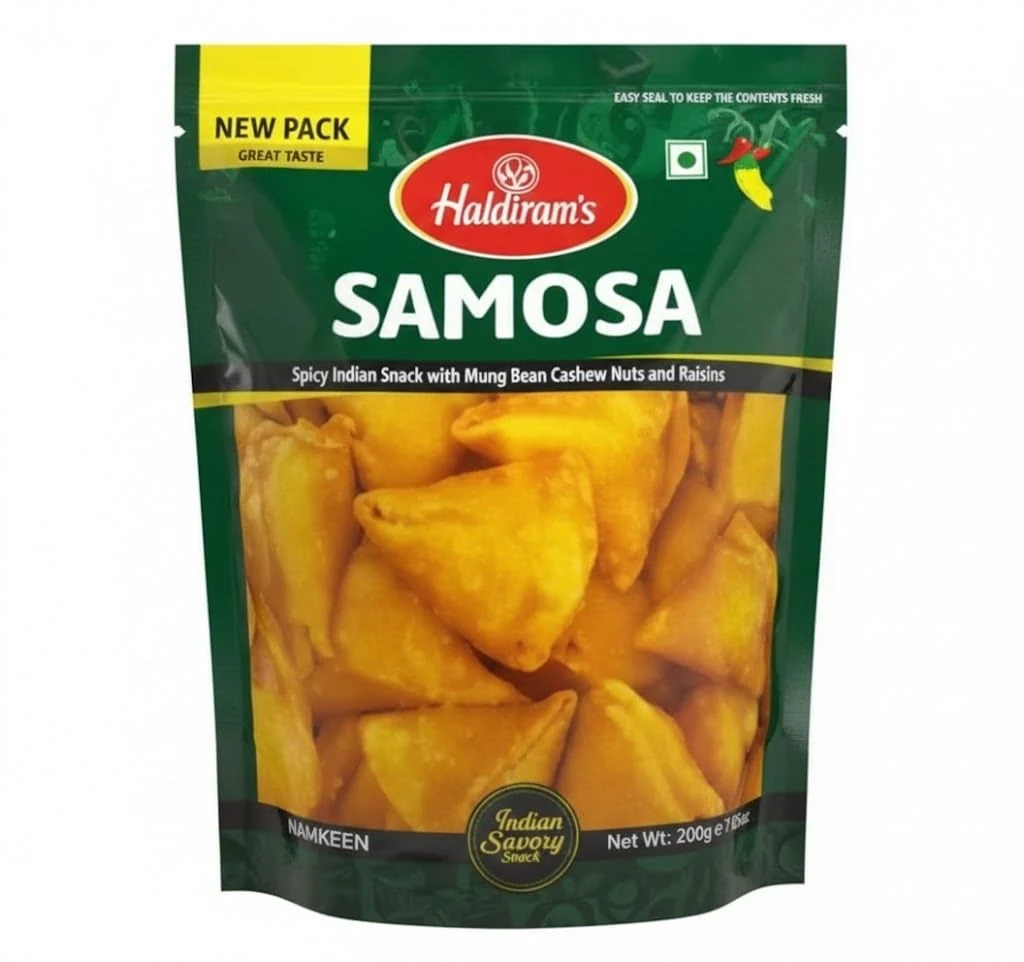 Haldiram's Delhi Boondi Plain
vs
Haldiram's Samosa
-
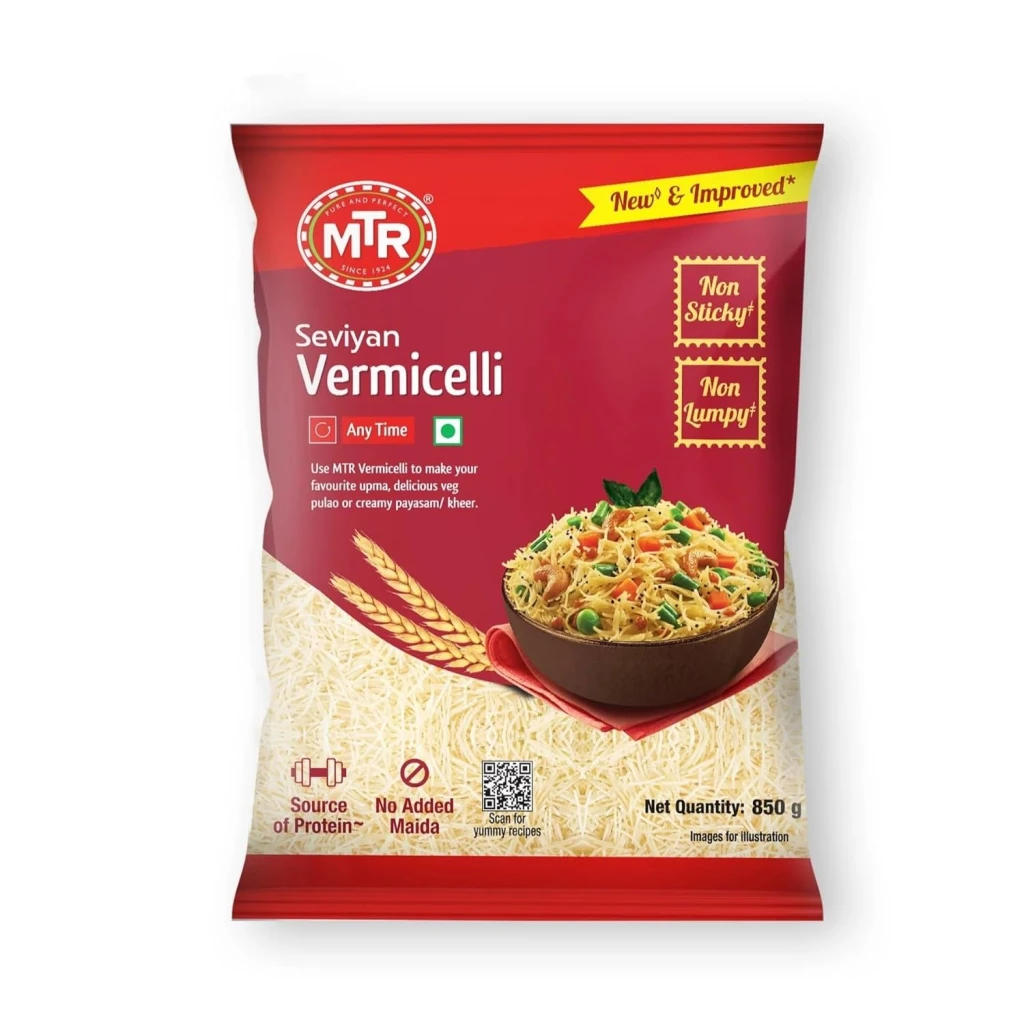 Haldiram's Delhi Boondi Plain
vs
MTR Vegetarian Seviyan Vermicelli
-
 Haldiram's Samosa
vs
MTR Ready to Eat Paneer Makhani
-
MTR Ready to Eat Paneer Makhani
vs
MTR Vegetarian Seviyan Vermicelli
-
Haldiram's Samosa
vs
MTR Vegetarian Seviyan Vermicelli
Comparison generated by Decode Label from each product's listed ingredients. Every score and flagged finding comes from Decode Label's rules engine; the explanations are written with AI and cannot change a score. Always read the actual label.