Safety scores no
brand can buy.
That's the promise behind Decode Label. Every product is scored against India's own FSSAI rules, every flag traces back to public regulatory data, and no ad budget can move the number. Independent, transparent & built for India.
Nutrition
Added sugar 21.8 g per 100 g
Potential concern
Caramel (INS150c)
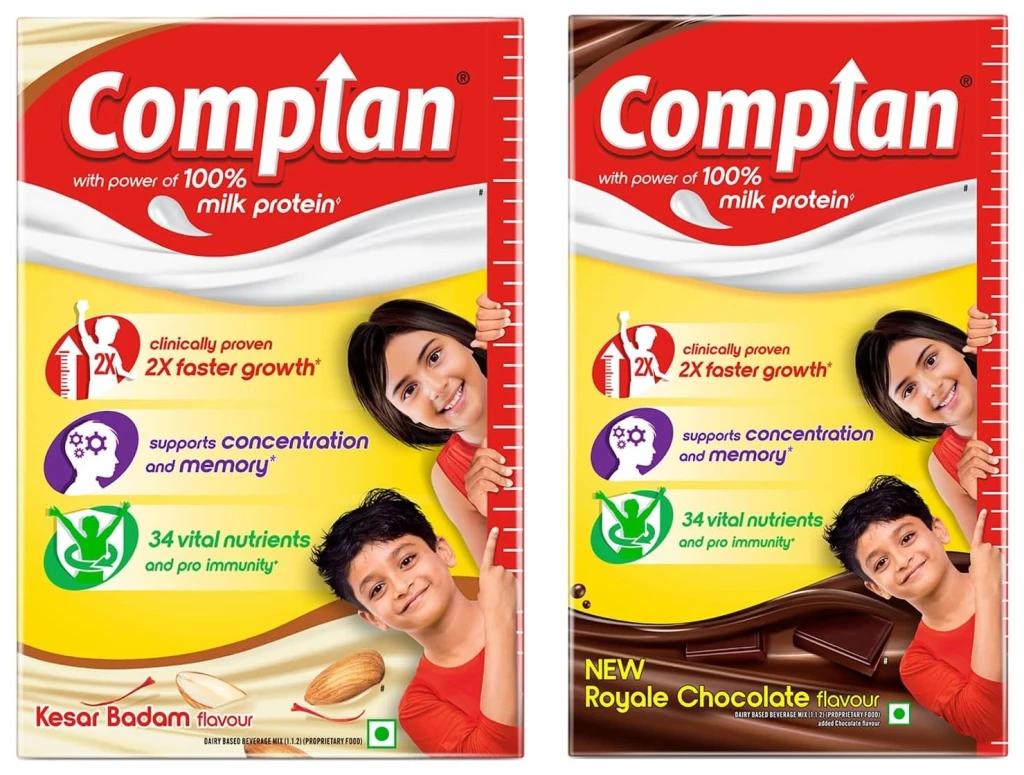
Complan
Complan 100% Milk Protein
From the declared label —
not a lab test
Findings to weigh
Nutrition
Added sugar 21.8 g per 100 g
The main factor limiting the score.
Potential concern
Caramel (INS150c)
Ammonia-process caramel colour (INS 150c/150d) — can generate 4-MEI, an IARC Group 2B classification
Declared allergens
Peanuts + Milk
What’s favorable
Trusted data sources & compliance
FSSAI
Ingredient database
EU Cosmetics
Safety regulations
WHO
Health standards
DPDP 2023
Privacy compliant
Decode Label Analysis
Safety scoring engine
Open Food Facts
Product database
FSSAI
Ingredient database
EU Cosmetics
Safety regulations
WHO
Health standards
DPDP 2023
Privacy compliant
Decode Label Analysis
Safety scoring engine
Open Food Facts
Product database
A score you can actually trust
Most ratings can be swayed by ad budgets. Ours can't. We hold ourselves to four promises — applied the same way whether a product scores a 2 or a 9.
100% independent
We're funded by people, never brands. No ads, no sponsored placements, no paid rankings — no product can buy its way to a better score.
Transparent by design
Every score traces back to public regulatory data — FSSAI, EU, WHO, IARC — and peer-reviewed research. We always show you the why, not just the number.
The same rules for all
A product is judged purely on what's inside it. Big brand or small, advertiser or not — nothing moves the needle except the ingredients.
Your data stays yours
We never sell your data. Health information is AES-256 encrypted and DPDP Act compliant. Privacy is the default here — never an upsell.
This is our pledge to every shopper who trusts us.
— The Decode Label team
Everything you need to make
smarter choices
From carcinogen detection to personalised allergen alerts — get the complete picture on every product, instantly.
Product Database
Search thousands of products by name, brand, or barcode — instantly. Filter by category, safety score, or product type. No sign-up required.
Decode Label Safety Score 0–10
A single, clear score from scientific data — FSSAI status, EU approval, carcinogen flags, endocrine disruptors, and allergens. Powered by advanced Decode Label analysis.
Submit a Product
Upload a back-label photo and Decode Label extracts the ingredient list, runs a full safety analysis, and adds it to the database in minutes.
User Reviews
Real experiences from other consumers alongside the Decode Label score. Star ratings, safety flags, and "would avoid" signals help you make faster decisions.
Marketing Claim Check
Decode Label reads the front-of-pack claims — "no added sugar", "100% natural" — and verdicts each one against the actual label: accurate, misleading, or unverifiable.
Nutrition Decoder
For packaged food and drinks, Decode Label reads the nutrition panel and flags sugar, salt, and saturated fat with simple traffic-light ratings per 100g.
Three steps to smarter shopping
No app needed. Works on any device, right now.
Search a product
Type any product name, brand, or barcode on decodelabel.com — or upload a back-label photo to extract the ingredient list automatically.
Decode Label analyses it
Every ingredient is cross-referenced against FSSAI regulations, EU safety data, WHO guidelines, and carcinogen lists — with category-specific context.
Get a clear verdict
See a 0–10 safety score, a plain-English summary, "Avoid if" health tags, flagged ingredient cards, and community reviews — all on one page.
India-specific safety ratings,
not just EU/US data
Most ingredient checkers only reference European or American regulations. Decode Label is built around FSSAI regulations — so you know what's approved, restricted, or banned in India, not just abroad.
Common questions
Yes — searching products, reading safety scores, and browsing the full ingredient analysis is completely free, with no account and no credit card required. Just open decodelabel.com and start.
No. Decode Label is funded by people, not brands — there are no ads, no sponsored placements, and no paid rankings. A product is judged purely on what is inside it, and the same rules apply whether it scores a 2 or a 9. No product can buy its way to a better score.
No. Decode Label runs entirely in your web browser at decodelabel.com — on your phone, tablet, or computer — with nothing to install. Search products, read 0–10 safety scores, and browse the full ingredient analysis without creating an account.
Any product with an ingredient list — packaged food, beverages, skincare, cosmetics, shampoos, conditioners, supplements, baby products. Products are searchable by name, brand, barcode, and category (face wash, shampoo, soft drink, protein supplement, etc.).
The score itself is produced by a deterministic engine, not by an AI opinion — the same label always yields the same number, and before any change to the method ships we re-run the entire catalogue and require every movement to be explainable. Judgements are cross-referenced against FSSAI regulations, EU safety lists, WHO and IARC data, and peer-reviewed research, and every flagged ingredient cites its source. Serious findings impose hard ceilings in code that the rest of the formula cannot argue past.
Yes. All health data (conditions, allergies, dietary needs) is encrypted with AES-256 before it's stored. We are fully compliant with India's Digital Personal Data Protection (DPDP) Act 2023. We never sell your data to third parties.
Open decodelabel.com and search by product name, brand, or barcode to pull up its 0–10 safety score and full ingredient breakdown. If a product is not in the database yet, upload a photo of its back label on the Submit page — Decode Label reads the ingredient list and runs a full safety analysis for you, usually within a few minutes.
Most ingredient checkers rely only on EU or US data. Decode Label is built around FSSAI regulations — the actual Indian standard — so it reports whether each ingredient is approved, restricted, or banned in India. It also checks front-of-pack marketing claims against the real label, and every flagged ingredient cites its source.
It is a single, plain-English safety rating for the whole product. As a rough guide, 7–10 is generally safe, 4–6.9 is moderate (a few ingredients worth noting), and below 4 signals significant concerns. Serious findings — a carcinogen-classified additive, trans fat, a banned substance — impose a ceiling the product cannot rise above no matter how good the rest of the formula is. Every score links to the specific flagged ingredients and the sources behind them.
Nutrition, Ingredients, Processing and Marketing. Each is scored on its own, then combined by fixed weights that never vary by brand, so you can always see which part cost a product its score. Nutrition carries the most weight on food and drink; personal-care products have no nutrition panel, so they are scored on the other three, where Ingredients leads. The full method is at decodelabel.com/how-we-score.
Decode Label is a product of Ingranova Technologies Private Limited, an independent company based in India. It was founded by Balendra Kumar Singh, a software engineer with 20+ years in IT — more than 10 of them building healthcare AI, including tuberculosis detection from sputum and symptom-analysis systems — and a B.Sc in Physics, Chemistry and Mathematics, who turned those skills on misleading product labels. It is not owned by, funded by, or affiliated with any food, cosmetics, or supplement brand, which is what keeps the scores impartial. Read the full founder story at decodelabel.com/our-story.
Scores draw on public, authoritative sources: FSSAI (Food Safety and Standards Authority of India) status, EU cosmetics safety lists, WHO and IARC carcinogen data, and peer-reviewed research — combined and explained by Decode Label. Every flagged ingredient cites the source it came from.
Decode Label is built around India’s FSSAI regulations, so it is uniquely relevant for products sold in India. The underlying ingredient science (EU, WHO, IARC) applies worldwide, so the safety scores are useful anywhere — but the approved / restricted / banned status is specific to India.
Still have questions? Email us →
Know what you're buying
before you buy it — free
Search any product right now — no download, no sign-up. Just honest ingredient safety data.