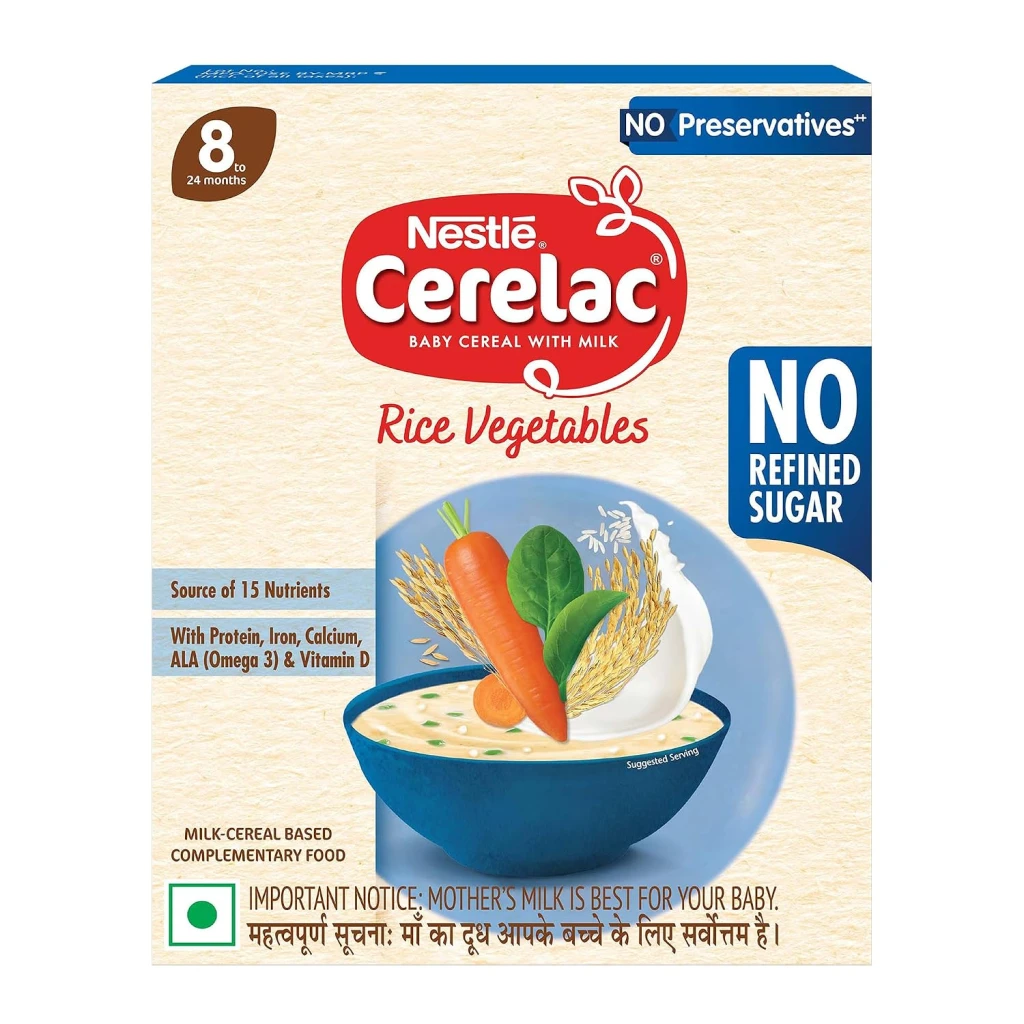
Pack image shown to identify the product. Decode Label is independent of Nestlé and is not sponsored or endorsed by it. Trademarks
Brand founded in Switzerland, 1866 · about the brand
Nestlé Baby Cereal with Milk Rice Vegetables
Scored for ages 6–11 months — the pack says "8 to 24 months".
Decode Label Safety Score
How we got 4.1 ShowHide
Reviewed 3 times · Methodology v3.1 (updated 8 Oct 2026) — what changed
This baby cereal provides essential nutrients for growth and development, with rice flour and milk solids forming the base. However, the presence of carrot juice concentrate as a free sugar source, combined with an undisclosed acidity regulator, warrants caution for parents aiming to minimize added sugars and maximize transparency in their child's diet. While the product is fortified with vitamins and minerals, the overall formulation could be improved by clearer ingredient disclosure and a reduction in free sugar sources for its target audience of babies and toddlers.
At a glance
From the declared label — not a lab testFindings to weigh
What’s favorable
- Minerals
- Vitamins
Declared allergens: Milk and Soy
Relevant if you have any of these allergies or intolerances.
Based on the declared ingredient list. This is a risk only to people with the allergy, not a general-population safety issue, so it does not lower the safety score.
Personal check · free
Is this right for you or your family?
Just checking whether the product is safe? The analysis above is yours, no account needed. To know if it is safe for you, your father or your child, add a profile and we check this label against them. This one declares Milk and Soy, so it matters if anyone in your family reacts to that.
- Allergies. Peanut, milk, gluten, egg and more, checked against the ingredient list.
- Diet. Vegetarian, vegan, Jain, no egg, no dairy.
- Health and goals. Sugar, salt, protein, steady blood sugar, heart-friendly, weight.
- Everyone you buy for. Save a profile for Papa or the kids and switch in one tap.
Baby cereal with milk and rice, contains free sugars and undisclosed additive
This baby cereal is primarily made from rice flour and milk solids, providing a source of carbohydrates and protein. It includes carrot juice concentrate, which contributes free sugars, and an undisclosed acidity regulator, which reduces transparency. While fortified with essential vitamins and minerals, parents should be aware of the free sugar content and the lack of full disclosure for one additive, especially for young children.
Consider this product carefully if you are
- Avoiding certain additives or colours — Carrot Juice Concentrate is declared.
Concern breakdown
Score out of 10 · higher = fewer concernsHow this product performs on each concern we check for baby. This is a breakdown of the same evidence behind the score above — not a separate verdict.
Saturated fat 5.9 g · trans fat 0.1 g per 100 g/ml
Infants under 1
LimitContains carrot juice concentrate, a source of free sugars. The WHO recommends avoiding added or free sugars for this age group.
Why the score is capped
Acidity regulator not disclosed — the label does not say which substance this is
Rule F-CAP-13
What's good
Fortified with essential vitamins and minerals
Provides a source of carbohydrates and protein from rice flour and milk solids
Watch out for
Contains carrot juice concentrate, a source of free sugars
Acidity Regulator is not specifically disclosed, impacting transparency
Contains Dibasic Potassium Phosphate, which requires caution for individuals with kidney issues
Ingredient Concerns safety database
Sources cited below may be Indian (FSSAI) or international (EU, US, WHO, IARC) — an international classification or law is evidence, not an Indian regulatory finding.
Fruit Juice Concentrate
Fruit-juice concentrate is fruit juice with the water removed, leaving concentrated sugars (largely fructose and glucose). Nutritionally it behaves as a free sugar and is frequently used to sweeten products that market themselves as having "no added sugar". The WHO recommends no free sugars for infants and young children, so it is a particular concern in foods aimed at babies and toddlers.
Regulatory & scientific authority Source: WHO Guideline: Sugars intake (2015); WHO Ending inappropriate promotion of foods for infants
Fruit Juice Concentrate: regulation, sources and other products →Dipotassium Phosphate (E340)
Used as an emulsifier and stabiliser. Adds both phosphate and potassium load, which patients with kidney disease or hyperkalaemia need to monitor closely.
Regulatory & scientific authority Source: FSSAI INS 340
Dipotassium Phosphate: regulation, sources and other products →Decode Label Analysis
Contains an undisclosed 'Acidity Regulator', which raises transparency concerns as the specific substance is not identified.
Carrot Juice Concentrate is a source of free sugars, which the World Health Organization advises minimizing in the diets of infants and young children.
Dibasic Potassium Phosphate is a phosphate additive; individuals with kidney conditions should exercise caution.
Claim check
1 claim not supported by label dataFront-of-pack marketing claims checked against this product's actual ingredients and nutrition. "Can't verify" means the label does not provide enough information to check the claim — it is not the same as the claim being false.
The ingredient list includes carrot juice concentrate. WHO counts honey, syrups, juice concentrates and similar sweeteners as free sugars and advises none for children under 2, so a "no sugar" or "naturally sweetened" claim on a baby food is misleading.
This is the maker’s regulatory age/stage designation for the product — an ingredient list can’t confirm or deny it, so it’s classified separately rather than flagged as a doubtful claim.
The ingredient list does not contain any preservatives.
The product name accurately describes the main ingredients: rice, milk solids, and vegetables (carrot juice concentrate, spinach puree) are listed in the ingredients.
The nutrition panel lists more than 15 distinct nutrients including energy, protein, fat, various vitamins, and minerals.
The nutrition information states 15g of protein per 100g.
The nutrition information states 3mg of iron per 100g.
The nutrition information states 420mg of calcium per 100g.
The nutrition information states 300mg of Alpha-Linolenic Acid-ALA (OMEGA 3 fatty acid) per 100g.
The nutrition information states 5µg of Vitamin D per 100g.
The primary ingredients are rice flour (a cereal) and milk solids, confirming it is milk-cereal based. The age range of 8-24 months indicates it is a complementary food.
Read straight from the back-of-pack photo — quantities, sections and any disguised terms, so the small print can’t hide behind the marketing.
-
1.
Rice Flour 55.7%Rice flour (55.7%)
-
2.
Milk Solids 38.3%Milk solids (38.3%)
-
3.
Soybean OilSoyabean oil
-
4.
Starch
-
5.
Carrot Juice Concentrate 1% trace amountCarrot juice concentrate (1%)
-
6.
Spinach Puree 0.5% trace amountSpinach puree (0.5%)
-
7.
Acidity RegulatorAcidity regulator (Dibasic Potassium phosphate)
-
Dibasic Potassium Phosphate within Acidity RegulatorDibasic Potassium phosphate
-
8.
Minerals
-
9.
Vitamins
-
10.
EnzymeEnzyme (Alpha amylase)
-
Alpha Amylase within EnzymeAlpha amylase
Trace amounts: some named ingredients appear in token quantities or low in the list. At these concentrations a meaningful benefit is unlikely, and their front-of-pack prominence may not reflect their level in the formulation.
In label order — normally largest quantity first. Select a row for the full write-up and sources.
These are major food allergens named on the ingredient list. They are a risk only to people allergic to them — not a general-population safety issue — so they do not lower the safety score. Anyone with the allergy should avoid this product, and check the pack’s own allergen statement.
The label declares each of these as a blend and then lists what is in it. The components appear in the groups above on their own merits, so the blend itself is shown here rather than counted a second time.
✓ Decode Label Assessment: Favorable ⚠ Decode Label Assessment: Concern Decode Label Assessment: Neutral
Who should take caution
About this ingredient
Declared on this label as
No detailed safety data in our database yet for this ingredient.
Learn More
| Energy | 432 kcal |
| Protein | 15 g |
| Carbohydrate | 65 g |
| Total Sugars | 16 g |
| Added Sugars | 0 g |
| Total Fat | 12.5 g |
| Saturated Fat | 5.9 g |
| Trans Fat | 0.07 g |
| Dietary Fibre | 0.5 g |
| Sodium | 120 mg |
| Monounsaturated Fat | 2.2 g |
| Polyunsaturated Fat | 2.8 g |
| Linoleic Acid (LA) | 2.5 g |
| Alpha-Linolenic Acid-ALA (OMEGA 3 fatty acid)^ | 300 mg |
| Cholesterol | 12 mg |
| Iron | 3 mg |
| Zinc | 2.8 mg |
| Calcium | 420 mg |
| Phosphorus | 300 mg |
| Potassium | 500 mg |
| Vitamin A | 350 µgRE |
| Vitamin C | 30 mg |
| Vitamin D | 5 µg |
| Thiamine (Vitamin B1) | 0.5 mg |
| Riboflavin (Vitamin B2) | 0.6 mg |
| Niacin Equivalent (Vitamin B3) | 4.5 mg |
| Pantothenic acid (Vitamin B5) | 2 mg |
| Pyridoxine (Vitamin B6) | 100 µg |
| Biotin (Vitamin B7) | 7.5 µg |
| Dietary Folate Equivalent (Vitamin B9) | 15 µgDFE |
Colour shows the per-100g level (green = low, amber = moderate, red = high), from the product's label.
Compare with other baby food products
Assessed using the same Decode Label methodology, sorted by score. Each score reflects the information available for that product at the time of assessment.
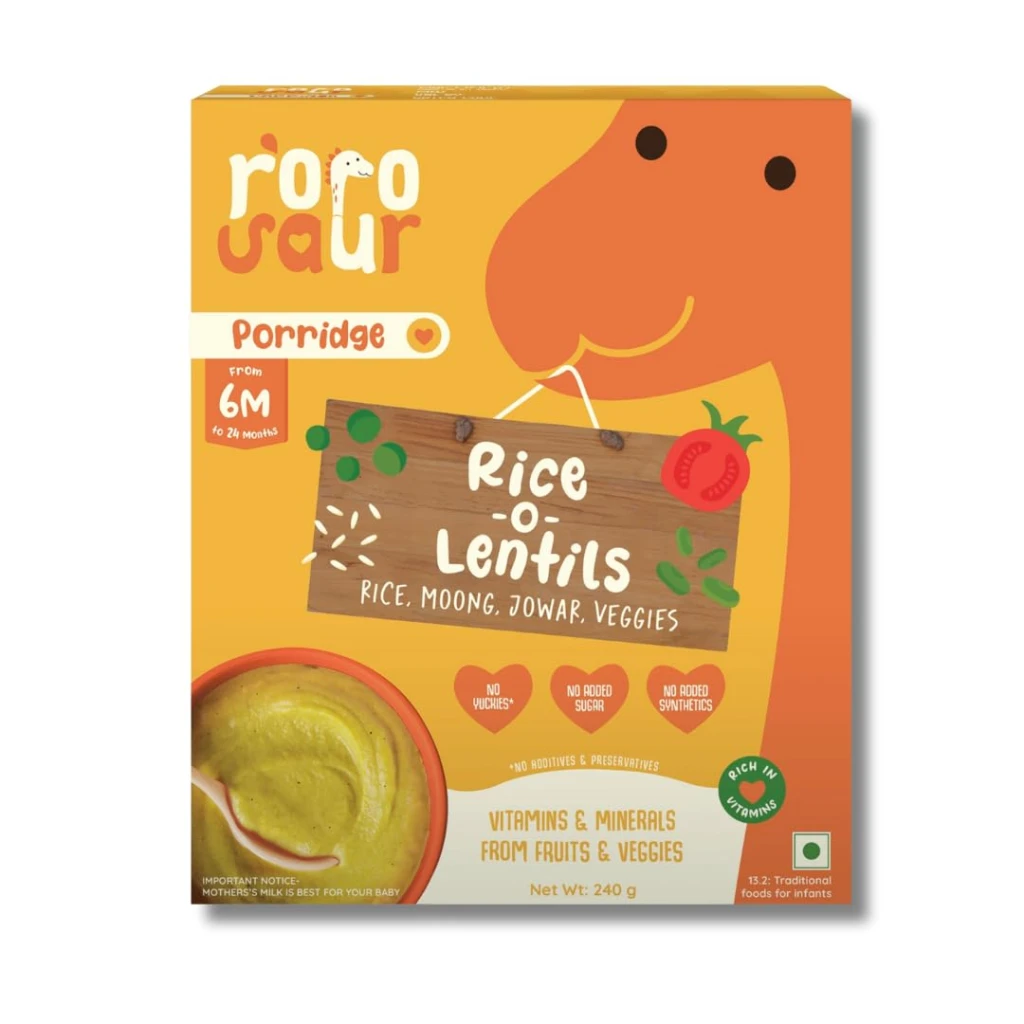
Rorosaur Khichdi Porridge Mix Baby Food
9.2Rorosaur
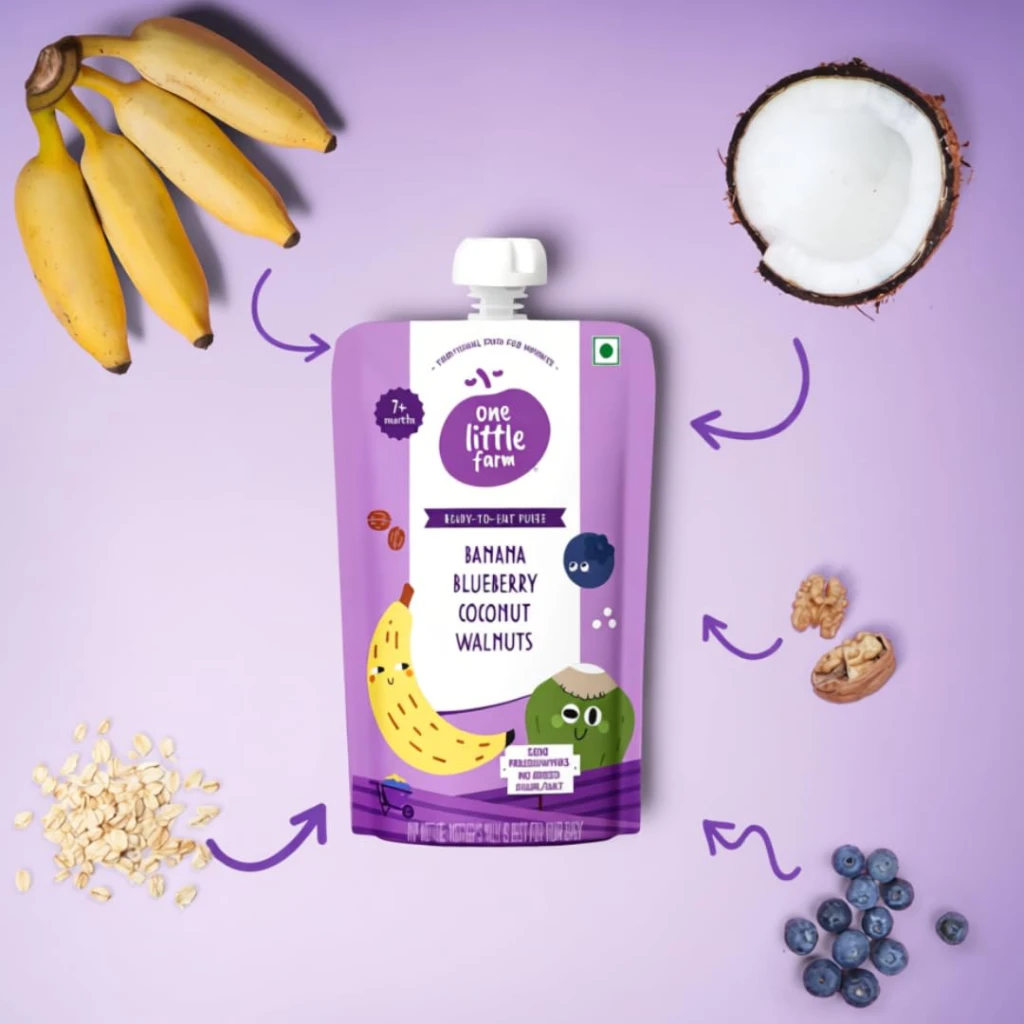
Banana Blueberry Coconut Walnuts Ready-To-Eat Puree
9.1One Little Farm
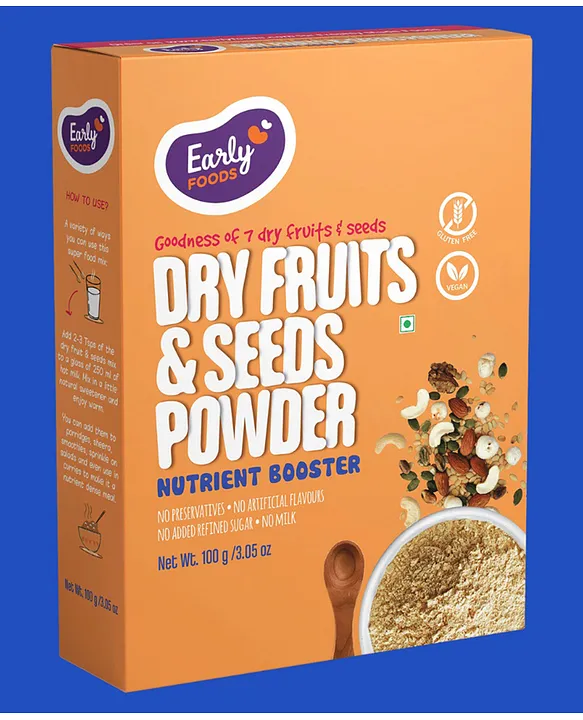
Early Foods Dry Fruit & Seed Mix Powder
9.1Early foods
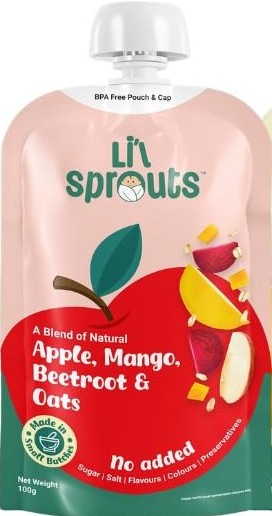
Li'l sprouts Apple, Mango, Beetroot & Oats
9.0Li'l sprouts
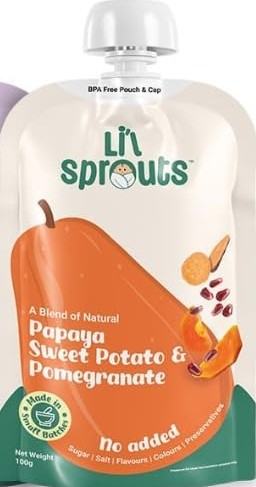
Li'l sprouts Papaya Sweet Potato & Pomegranate
8.9Li'l sprouts
Also on this shelf
More Baby Food products we've analysed, in name order.
-
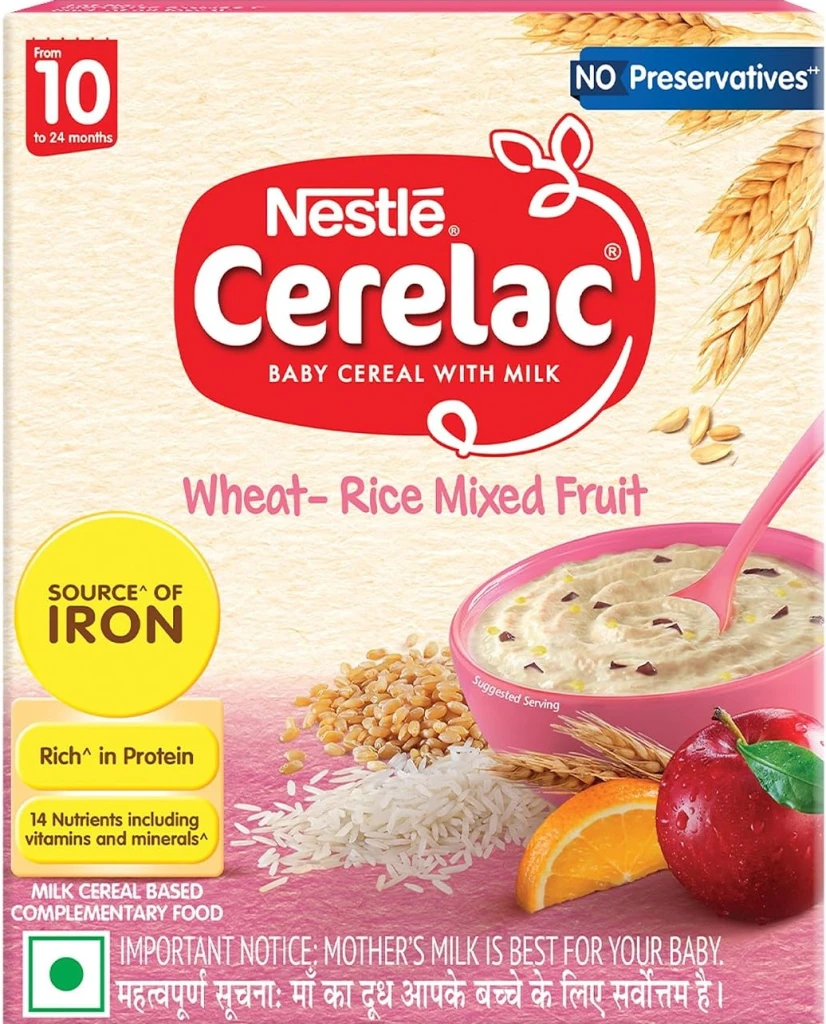 Nestle Nestle Baby Cereal with Milk Wheat- Rice Mixed Fruit
See the analysis
-
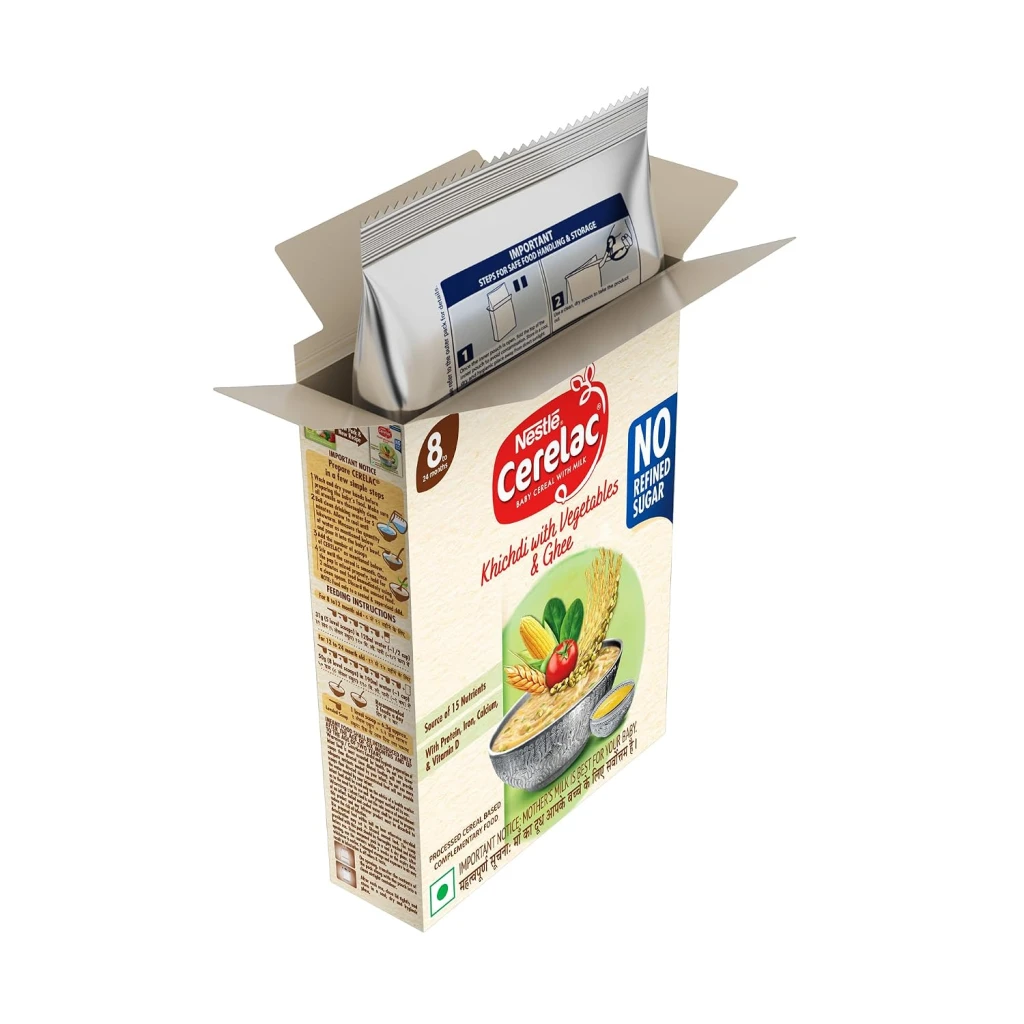 Nestlé Nestle Khichdi with Vegetables & Ghee
See the analysis
-
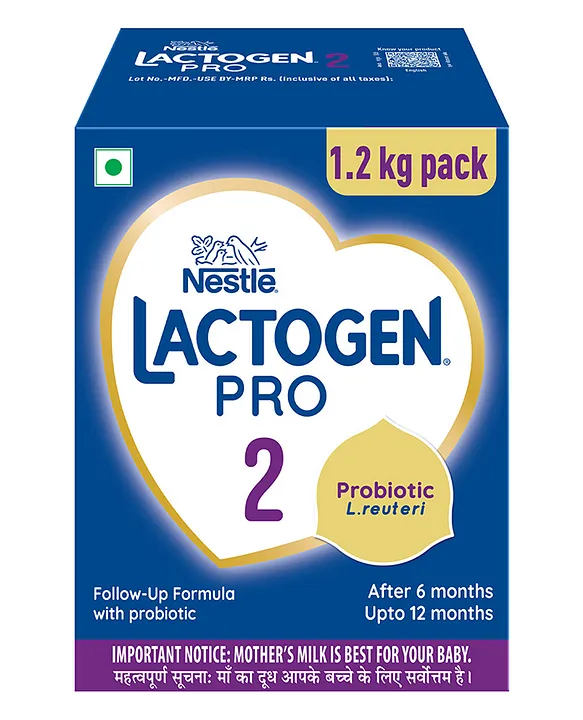 nestle Nestle Lactogen Pro 2 Powder, Follow-Up Formula
See the analysis
-
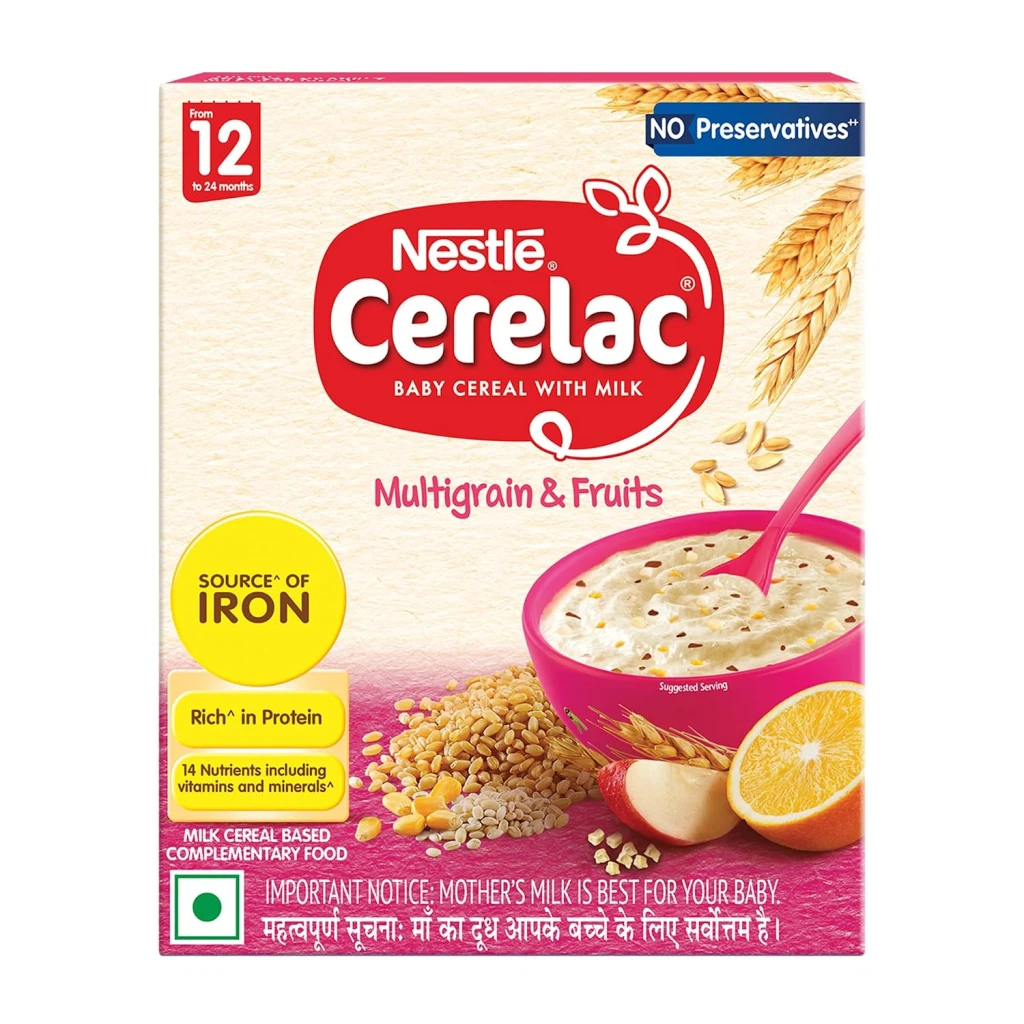 Nestlé Nestlé Baby Cereal with Milk Multigrain & Fruits
See the analysis
-
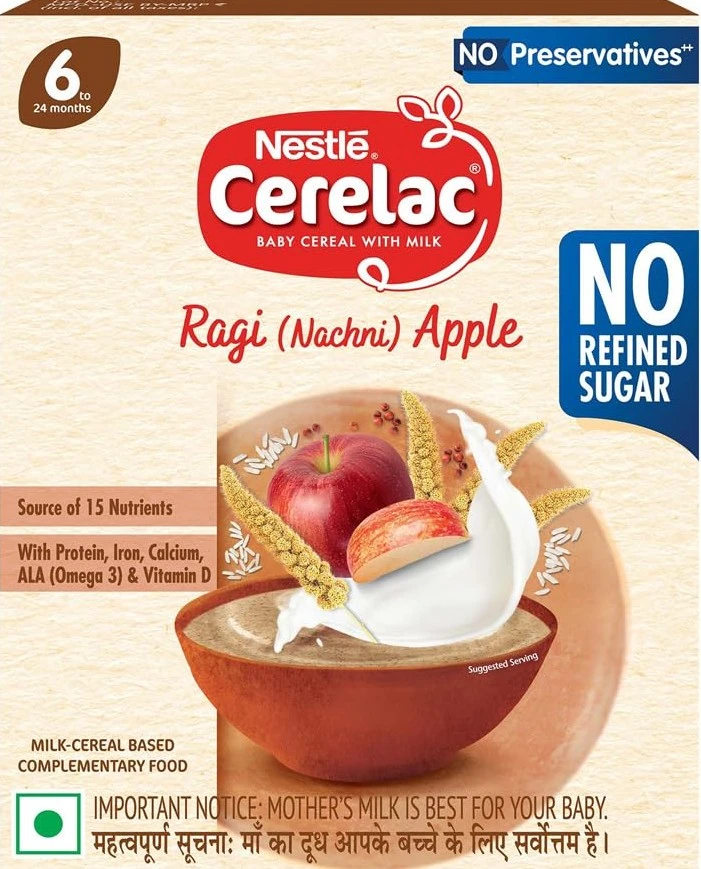 Nestlé Nestlé Baby Cereal with Milk Ragi (Nachni) Apple
See the analysis
-
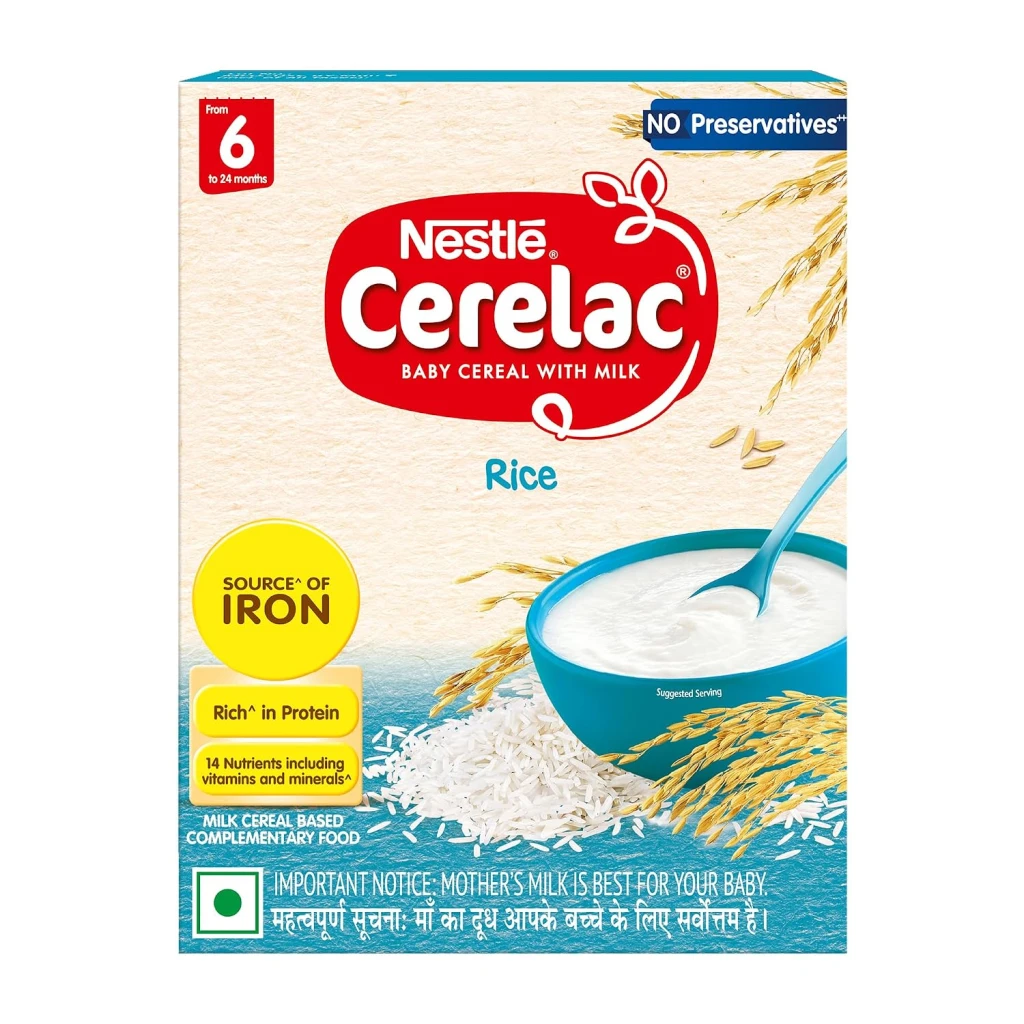 Nestlé Nestlé Baby Cereal with Milk Rice
See the analysis
What are the ingredients in Nestlé Baby Cereal with Milk Rice Vegetables?
The label of Nestlé Baby Cereal with Milk Rice Vegetables lists 12 ingredients, in label order: Rice flour, Milk Solids, Soybean oil, Starch, Carrot Juice Concentrate, Spinach Puree, Acidity Regulator, Dibasic potassium phosphate, Minerals, Vitamins, Enzyme, Alpha amylase. Flagged by the analysis: Carrot Juice Concentrate, Dibasic potassium phosphate.
Is Nestlé Baby Cereal with Milk Rice Vegetables safe to eat?
Nestlé Baby Cereal with Milk Rice Vegetables scores 4.1/10 on Decode Label (Moderate). This baby cereal is primarily made from rice flour and milk solids, providing a source of carbohydrates and protein. It includes carrot juice concentrate, which contributes free sugars, and an undisclosed acidity regulator, which reduces transparency. While fortified with essential vitamins and minerals, parents should be aware of the free sugar content and the lack of full disclosure for one additive, especially for young children.
Why does Nestlé Baby Cereal with Milk Rice Vegetables score 4.1/10?
Flagged in the score: Contains carrot juice concentrate, a source of free sugars. Contains Dibasic Potassium Phosphate, which requires caution for individuals with kidney issues. Also noted: Acidity Regulator is not specifically disclosed, impacting transparency.
Who should avoid Nestlé Baby Cereal with Milk Rice Vegetables?
The points the analysis notes are most relevant to: Avoiding free sugars for infants and toddlers; Sensitive to undisclosed food additives; Kidney disease (due to Dipotassium Phosphate); Milk allergy / lactose intolerance; Soy allergy.
Is Nestlé Baby Cereal with Milk Rice Vegetables suitable for babies or young children?
Infants under 1: Limit.
Does Nestlé Baby Cereal with Milk Rice Vegetables contain allergens?
Yes — the ingredient list contains milk (Milk Solids) and soy (Soybean oil). Check the allergen statement on the pack too if you have a diagnosed allergy.
Does Nestlé Baby Cereal with Milk Rice Vegetables contain milk?
Yes — the ingredient list names Milk Solids. People with milk allergy / lactose intolerance should treat it as containing milk, and check the allergen statement on the pack too.
Does Nestlé Baby Cereal with Milk Rice Vegetables contain soy?
Yes — the ingredient list names Soybean oil. People with soy allergy should treat it as containing soy, and check the allergen statement on the pack too.
How much sugar is in Nestlé Baby Cereal with Milk Rice Vegetables?
16 g of total sugar per 100 g. The label declares 0 g of that as added sugar per 100 g. WHO advises no free sugars for children under 2. The ingredient list names Carrot Juice Concentrate.
Are the claims on the Nestlé Baby Cereal with Milk Rice Vegetables pack accurate?
Decode Label checked 11 claims against the ingredient list and nutrition panel. "No Refined Sugar" — misleading. "8 to 24 months" — can't be verified from the label.
Answers are generated from this product's own Decode Label analysis — the score, the ingredient list and the label claims shown above. Always check the pack itself for allergen and dietary information.
Reader reviews
How the product performed for people who used it — taste, value, everyday experience. Separate from the Decode Label score above, which rates what is on the label.
Sign in to leave a review.
Sign in →No reviews yet — be the first to share your experience.
Help us keep this accurate
Two quick questions about our analysis — not about the product.
Was this analysis helpful?
Tells us whether the breakdown above actually answered your question.
0 of 0 readers found this analysis helpful
Does your pack match this page?
Recipes change and packs get reformulated. If the ingredients or the panel on the pack in your hand differ from what we show, tell us and we will check it.
About this analysis: Based on declared label information and available evidence. Decode Label does not independently laboratory-test products, and a score is not a regulatory determination or medical advice.
Disclaimer: Safety scores are Decode Label-generated assessments based on publicly available regulatory data (FSSAI, WHO, EFSA, IARC) and peer-reviewed research. They are not a substitute for professional medical advice, and they are not a regulatory determination, a laboratory safety certification or a medical diagnosis. Ingredient safety can vary by individual health conditions, concentration, and usage context. Decode Label is an independent information service and scores every brand by the same rules. No brand pays for or influences its score. Our founder also founded the personal-care brand Botani Bestie (see our story); its products are scored exactly like everyone else's. Data limitations: This assessment is based on the information declared on the product label and the evidence sources above — Decode Label does not independently laboratory-test this product. Ingredient concentrations, sourcing and manufacturing can vary between batches and are not always disclosed. A finding that is not shown here means it was not identified from the available label information, not that it has been ruled out.
Report Error
If you believe this score is inaccurate, provide details below. Our team reviews every report and will update the rating if warranted.
Report submitted
Our team will review your report and update the rating if the evidence warrants it. Thank you for helping keep our data accurate.
Share this product
Nestlé Baby Cereal with Milk Rice Vegetables
Link copied — paste it in your Instagram bio or Story!