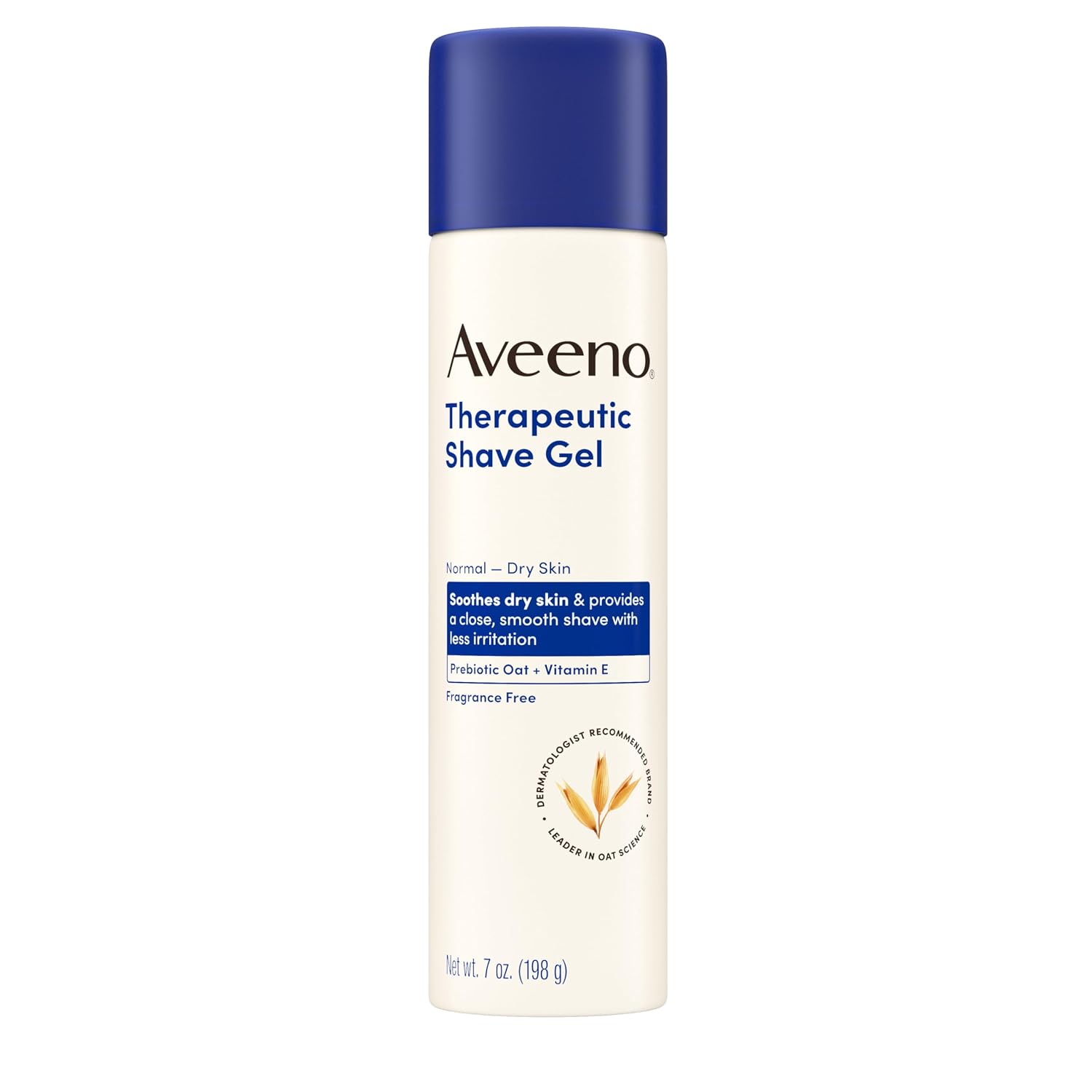
Pack image shown to identify the product. Decode Label is independent of Aveeno and is not sponsored or endorsed by it. Trademarks
Therapeutic Shave Gel
Decode Label Safety Score
How we got 3.9 ShowHide
Reviewed 5 times · Methodology v3.1 (updated 8 Oct 2026) — what changed
The score is capped for a specific safety reason, set out below. This shaving gel contains Triethanolamine, which can form nitrosamines in the presence of nitrosating agents, a concern for prolonged skin contact. It also includes parabens (Methylparaben, Propylparaben, Ethylparaben) which are flagged for endocrine disruption concerns, though they are listed in trace amounts.
At a glance
From the declared label — not a lab testFindings to weigh
What’s favorable
- Glycerin
- Sunflower Seed Oil Glyceride
- Avena Sativa (Oat) Kernel Flour
Contains Triethanolamine and parabens with endocrine disruption concerns
The score is capped for a specific safety reason, set out below. This shaving gel contains Triethanolamine, which has the potential to form nitrosamines, a concern for skin exposure. It also includes parabens, such as Methylparaben and Propylparaben, which are associated with endocrine disruption concerns, though they are present in very small amounts. Individuals with sensitive skin or those avoiding these specific ingredients should exercise caution.
Consider this product carefully if you are
- Avoiding certain additives or colours — Methylparaben and Propylparaben are declared.
Personal check · free
Is this right for you or your family?
Just checking whether the product is safe? The analysis above is yours, no account needed. To know if it is safe for you, your father or your child, add a profile and we check this label against them.
- Ingredients you avoid. Sulphates, parabens, silicones, fragrance, drying alcohol, PEGs and more.
- Sensitivities. Sensitive skin, hormonal considerations, pregnancy.
- Skin and hair goals. Acne, dryness, ageing, hair fall, dandruff: what the label declares for each.
- Everyone you buy for. Save a profile for each person and switch in one tap.
Why the score is capped
Contains an ingredient flagged for endocrine-disruption concern
Rule PC-CAP-07
What's good
Contains Glycerin and Sunflower Seed Oil Glyceride for skin conditioning
Includes Avena Sativa (Oat) Kernel Flour for soothing properties
Watch out for
Triethanolamine's potential for nitrosamine formation
Paraben preservatives (Methylparaben, Propylparaben, Ethylparaben) with endocrine disruption concerns, though in trace amounts
Phenoxyethanol, with caution advised for young children
Ethoxylated ingredient (PEG-12 Dimethicone) may contain trace 1,4-dioxane impurity
Sorbitol — sugar alcohol - excessive intake can cause bloating and a laxative effect.
Ingredient Concerns safety database
Sources cited below may be Indian (FSSAI) or international (EU, US, WHO, IARC) — an international classification or law is evidence, not an Indian regulatory finding.
Methylparaben (E218)
Methylparaben is a permitted paraben preservative in EU cosmetics (Annex V, up to 0.4% as a single ester, 0.8% for mixtures of esters). The EU scientific committee (SCCS) confirmed it is safe at those maximum concentrations. Five other parabens (isopropyl-, isobutyl-, phenyl-, benzyl- and pentylparaben) are prohibited in the EU because their safety could not be evaluated.
Regulatory & scientific authority Source: Commission Regulation (EU) No 358/2014 (recitals 5 and 7; Annex V entry 12)
Methylparaben: regulation, sources and other products →Propylparaben
Propylparaben has stronger oestrogenic activity than methylparaben. The EU has restricted its use to 0.14% in cosmetics due to endocrine disruption concerns. It has been detected in breast tissue and is a focus of ongoing research into hormone-sensitive cancers.
Regulatory & scientific authority Source: EU Regulation 1223/2009; Darbre et al. 2004
Propylparaben: regulation, sources and other products →Phenoxyethanol
Phenoxyethanol is the most widely used paraben-free preservative. The EU limits it to 1% in cosmetics (SCCS has confirmed this is safe for adults), and the French regulator ANSM advised in 2012 against leave-on products containing it for the nappy area of children under three and recommended a lower concentration for them. It can irritate sensitive skin.
Regulatory & scientific authority Source: EU Regulation 1223/2009 Annex V (max 1.0%); SCCS opinion SCCS/1575/16; ANSM recommendation (2012)
Phenoxyethanol: regulation, sources and other products →Triethanolamine
Triethanolamine is a pH adjuster and emulsifier. EU rules restrict alkanolamines because they can react with nitrosating agents (some preservatives) to form nitrosamines, which are carcinogenic; products must be formulated to avoid this. It can irritate skin at higher concentrations.
Regulatory & scientific authority Source: EU Regulation 1223/2009 (Annex III restrictions on alkanolamines and nitrosamine formation); SCCS
Triethanolamine: regulation, sources and other products →Sugar Alcohols (Polyols)
Polyols are bulk sweeteners and humectants (also used in toothpaste). They are only partly absorbed, so large amounts can cause gas, bloating and a laxative effect, and EU rules require foods containing them to say "excessive consumption may produce laxative effects". Xylitol is toxic to dogs.
Regulatory & scientific authority Source: EU Regulation 1169/2011 Annex III (polyol labelling statement); EU Regulation 1333/2008
Sugar Alcohols (Polyols): regulation, sources and other products →Polyethylene Glycols (PEGs)
PEG ingredients are made by ethoxylation, which can leave traces of ethylene oxide (IARC Group 1) and 1,4-dioxane (IARC Group 2B) unless removed. Good manufacturing removes them, so the ingredient itself is not a hazard, but the label cannot tell you whether it was done well. PEGs should not be applied to broken skin.
Regulatory & scientific authority Source: IARC Monographs Vol. 100F (ethylene oxide) and Vol. 71 (1,4-dioxane); Cosmetic Ingredient Review
Polyethylene Glycols (PEGs): regulation, sources and other products →Decode Label Analysis
Contains Triethanolamine, which can form nitrosamines in the presence of nitrosating agents. Nitrosamines are classified by IARC as possible human carcinogens (Group 2B).
Contains Methylparaben and Propylparaben, which are paraben preservatives associated with endocrine disruption concerns. Propylparaben is restricted in EU cosmetics for certain uses and concentrations.
Contains Phenoxyethanol, a common preservative. French regulators advise caution for use in products for children under 3 years old.
Contains PEG-12 Dimethicone, an ethoxylated ingredient that may carry trace amounts of 1,4-dioxane, a manufacturing impurity classified by IARC as Group 2B (possibly carcinogenic to humans). The EU SCCS considers 1,4-dioxane at or below 10 ppm in a finished cosmetic safe.
Combined Effects interactions
While Triethanolamine can form nitrosamines with nitrosating agents, the presence of parabens does not directly contribute to this specific interaction. The concern for parabens is endocrine disruption, which is separate from nitrosamine formation.
Claim check
Front-of-pack marketing claims checked against this product's actual ingredients and nutrition. "Can't verify" means the label does not provide enough information to check the claim — it is not the same as the claim being false.
The suitability for 'Normal - Dry Skin' is a product designation that cannot be verified from the ingredient list.
The claims of soothing dry skin, providing a close/smooth shave, and reducing irritation are benefits that cannot be verified from the ingredient list.
The claim of being a 'Dermatologist Recommended Brand' is a third-party endorsement that cannot be verified from the ingredient list.
The claim of being a 'Leader in Oat Science' is a brand positioning statement that cannot be verified from the ingredient list.
The ingredient list includes Avena Sativa (Oat) Kernel Flour and Tocopheryl Acetate (Vitamin E), supporting the presence of oat and vitamin E.
The ingredient list does not contain any common fragrance ingredients.
Read straight from the back-of-pack photo — quantities, sections and any disguised terms, so the small print can’t hide behind the marketing.
-
1.
Water
-
2.
Palmitic Acid
-
3.
Triethanolamine
-
4.
Isopentane
-
5.
Sorbitol
-
6.
Stearic Acid
-
7.
Glycerin
-
8.
Sorbitan Stearate
-
9.
Isobutane
-
10.
Sunflower Seed Oil Glyceride
-
11.
Hydroxyethylcellulose
-
12.
PEG-12 Dimethicone
-
13.
Avena Sativa (Oat) Kernel Flour
-
14.
Phenoxyethanol
-
15.
Hydroxypropyl Methylcellulose
-
16.
Methylparaben
-
17.
Propylparaben
-
18.
Ethylparaben
-
19.
Benzaldehyde
-
20.
Panthenol
-
21.
Tocopheryl Acetate
-
22.
Aloe Barbadensis Leaf Juice Powder trace amount
-
23.
Allantoin
Trace amounts: some named ingredients appear in token quantities or low in the list. At these concentrations a meaningful benefit is unlikely, and their front-of-pack prominence may not reflect their level in the formulation.
In label order — normally largest quantity first. Select a row for the full write-up and sources.
Fragrance allergens are substances EU cosmetics rules require to be named on the label (such as Limonene and Linalool). Fragrant botanicals such as essential oils are grouped with them because they can naturally contain such substances, but they are not on that list. They matter mainly for people with fragrance allergies or already-sensitive skin — not a general-population safety issue. Each named allergen takes a small deduction from the ingredient score, and a high count can cap it; fragrant botanicals take none. Naming them on the label is a transparency positive.
✓ Decode Label Assessment: Favorable ⚠ Decode Label Assessment: Concern Decode Label Assessment: Neutral
Who should take caution
About this ingredient
Declared on this label as
No detailed safety data in our database yet for this ingredient.
Learn More
Compare with other shaving gel products
Assessed using the same Decode Label methodology, sorted by score. Each score reflects the information available for that product at the time of assessment.
What are the ingredients in Therapeutic Shave Gel?
The label of Therapeutic Shave Gel lists 23 ingredients, in label order: Water, PALMITIC ACID, Triethanolamine, Isopentane, Sorbitol, STEARIC ACID, Glycerin, Sorbitan Stearate, Isobutane, Sunflower Seed Oil Glyceride, Hydroxyethylcellulose, PEG-12 Dimethicone, Avena Sativa (Oat) Kernel Flour, Phenoxyethanol, Hydroxypropyl Methylcellulose, Methylparaben, Propylparaben, Ethylparaben, Benzaldehyde, Panthenol, Tocopheryl Acetate, Aloe Barbadensis Leaf Juice Powder, Allantoin. Flagged by the analysis: Triethanolamine, Methylparaben, Propylparaben, Phenoxyethanol, Ethylparaben and 2 more.
Is Therapeutic Shave Gel safe to use?
Therapeutic Shave Gel scores 3.9/10 on Decode Label (Concerning). The score is capped for a specific safety reason, set out below. This shaving gel contains Triethanolamine, which has the potential to form nitrosamines, a concern for skin exposure. It also includes parabens, such as Methylparaben and Propylparaben, which are associated with endocrine disruption concerns, though they are present in very small amounts. Individuals with sensitive skin or those avoiding these specific ingredients should exercise caution.
Why does Therapeutic Shave Gel score 3.9/10?
Flagged in the score: Triethanolamine's potential for nitrosamine formation. Paraben preservatives (Methylparaben, Propylparaben, Ethylparaben) with endocrine disruption concerns, though in trace amounts. Phenoxyethanol, with caution advised for young children.
Who should avoid Therapeutic Shave Gel?
The points the analysis notes are most relevant to: Sensitive to Triethanolamine or nitrosamines; Avoiding paraben preservatives; Sensitive skin.
Does Therapeutic Shave Gel contain allergens?
Yes — the label lists 1 fragrance allergen: Benzaldehyde. These matter mainly if you have sensitive skin or a known fragrance allergy.
Are the claims on the Therapeutic Shave Gel pack accurate?
Decode Label checked 6 claims against the ingredient list and nutrition panel. "Normal - Dry Skin" — can't be verified from the label. "Soothes dry skin & provides a close, smooth shave with less irritation" — can't be verified from the label. "Dermatologist Recommended Brand" — can't be verified from the label.
Answers are generated from this product's own Decode Label analysis — the score, the ingredient list and the label claims shown above. Always check the pack itself for allergen and dietary information.
Reader reviews
How the product performed for people who used it — taste, value, everyday experience. Separate from the Decode Label score above, which rates what is on the label.
Sign in to leave a review.
Sign in →No reviews yet — be the first to share your experience.
Help us keep this accurate
Two quick questions about our analysis — not about the product.
Was this analysis helpful?
Tells us whether the breakdown above actually answered your question.
0 of 0 readers found this analysis helpful
Does your pack match this page?
Recipes change and packs get reformulated. If the ingredients or the panel on the pack in your hand differ from what we show, tell us and we will check it.
About this analysis: Based on declared label information and available evidence. Decode Label does not independently laboratory-test products, and a score is not a regulatory determination or medical advice.
Disclaimer: Safety scores are Decode Label-generated assessments based on publicly available regulatory data (FSSAI, WHO, EFSA, IARC) and peer-reviewed research. They are not a substitute for professional medical advice, and they are not a regulatory determination, a laboratory safety certification or a medical diagnosis. Ingredient safety can vary by individual health conditions, concentration, and usage context. Decode Label is an independent information service and scores every brand by the same rules. No brand pays for or influences its score. Our founder also founded the personal-care brand Botani Bestie (see our story); its products are scored exactly like everyone else's. Data limitations: This assessment is based on the information declared on the product label and the evidence sources above — Decode Label does not independently laboratory-test this product. Ingredient concentrations, sourcing and manufacturing can vary between batches and are not always disclosed. A finding that is not shown here means it was not identified from the available label information, not that it has been ruled out.
Report Error
If you believe this score is inaccurate, provide details below. Our team reviews every report and will update the rating if warranted.
Report submitted
Our team will review your report and update the rating if the evidence warrants it. Thank you for helping keep our data accurate.
Share this product
Therapeutic Shave Gel
Link copied — paste it in your Instagram bio or Story!